
SB 3222: Illinois’ New Cannabis and Hemp Law Explained
After years of friction between licensed cannabis operators, hemp retailers, medical patients and regulators, SB 3222 marks one of the state’s most consequential cannabis reforms since legalization.
When Gov. J.B. Pritzker signed SB 3222 into law, Illinois did more than update a cannabis statute.
It drew a line.
For years, the state’s licensed cannabis businesses have operated inside one of the most tightly regulated markets in the country, where dispensaries, growers, infusers and transporters must navigate licensing, testing, taxes, packaging rules, security requirements and agency oversight. At the same time, intoxicating hemp-derived products — often marketed as Delta-8, THC-P, HHC and other cannabinoids — have appeared in gas stations, smoke shops, convenience stores and online marketplaces, often outside the same regulatory framework.
The result was a split-screen cannabis economy: one market heavily controlled, another far less so.
SB 3222 is Illinois’ attempt to close that gap.
Table of Contents
The new law, now Public Act 104-0463, creates the Illinois Hemp Act, restricts the sale of intoxicating hemp products, strengthens enforcement authority, expands medical cannabis access, updates licensing rules, and provides new relief and flexibility for parts of the state’s cannabis industry — including social equity operators who have spent years trying to survive in a difficult market.
It is, in many ways, the most significant cannabis reform package Illinois has passed since adult-use legalization.
But the law’s real impact will not be measured by the signing ceremony. It will be measured by what happens next: how agencies write the rules, how businesses adapt, how patients experience access, and whether the state can regulate intoxicating hemp without crushing legitimate hemp and CBD businesses.
A Loophole Becomes a Market: What SB 3222 Changes in Illinois
To understand why SB 3222 matters, it helps to understand the problem it was designed to solve.
Hemp became federally legal under the 2018 Farm Bill, which allowed cannabis plants and derivatives with no more than 0.3 percent Delta-9 THC by dry weight. That created a legal pathway for non-intoxicating hemp products such as CBD oils, creams and wellness products.
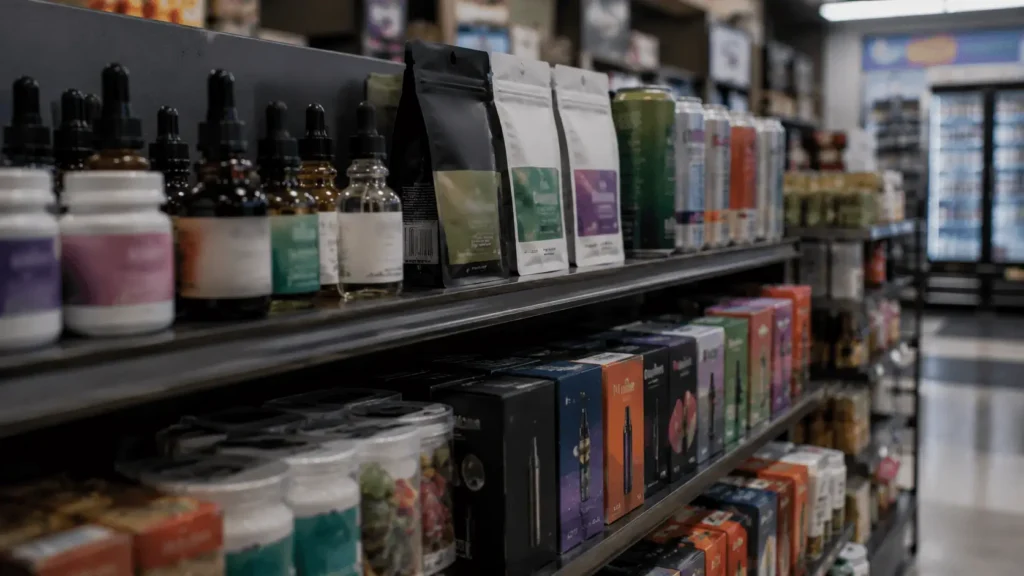
But it also opened the door to a new class of intoxicating hemp-derived cannabinoids. Some products were chemically converted or concentrated in ways that produced effects similar to cannabis sold in licensed dispensaries — but without the same age restrictions, product testing, labeling rules or retail controls.
In Illinois, as in many states, those products spread faster than lawmakers could regulate them.
Parents, public health officials and licensed cannabis operators raised concerns about gummies, drinks and vapes that could be intoxicating but were sold in settings where a 21-and-over cannabis ID check was not always required. Some products were packaged in ways that resembled candy or snacks. Others carried inconsistent labels or potency claims that were difficult for consumers to verify.
For licensed dispensaries, the frustration was both economic and regulatory. Cannabis operators had spent years complying with strict rules, paying high taxes and building expensive security and inventory systems, only to compete with products that could produce similar effects under looser oversight.
For hemp businesses, the concern ran in the other direction: that lawmakers would overcorrect, punishing legitimate CBD and hemp companies while trying to rein in intoxicating products.
SB 3222 tries to thread that needle.
It does not treat all hemp as the same. Instead, it creates a new framework for hemp-derived cannabinoid products and sharply limits products that contain intoxicating or synthetic cannabinoids outside approved channels. The law also prohibits the sale, distribution, manufacture, or production of hemp products without the required authorization or licensing.
“We had a great peice of legislation that was submitted the past 2 sessions but legislators were not interested in pushing it forward. It would have added a 21 age gate, labeling standards, and testing compliance for products without adding exorbitant fees that cripple small businesses.” said Kayleigh Jump, of Ceilidh’s (kay-lee’s) Cannabis Conjurations
The state’s goal is not merely to ban a product category. It is to decide what belongs in the regulated cannabis system, what belongs in the hemp system, and what should not be sold to consumers at all.

The First Change of SB 3222: No Sales to Minors
The most immediate public-facing change is the restriction on intoxicating hemp products for people under 21.
That provision speaks to one of the central arguments behind the law: that intoxicating cannabis-like products should not be available to minors simply because they are derived from hemp rather than marijuana.
Under the new framework, Illinois will require stronger controls around hemp-derived cannabinoid products, including licensing, labeling, testing, packaging, recall authority and enforcement mechanisms. The law also gives regulators tools to address products that violate consumer protection standards.
The significance is not just that the state is setting an age gate. It is that Illinois is moving intoxicating hemp out of a gray area and into a system where regulators can inspect, recall, penalize and enforce.
That is especially important in a market where consumers often cannot easily distinguish between CBD, hemp-derived THC, adult-use cannabis, medical cannabis and synthetic or converted cannabinoids. To many shoppers, the packaging looks similar. To regulators, the differences matter enormously.
SB 3222 attempts to make those differences enforceable.
“As a physician, I look at SB 3222 through the lens of patient safety and patient access,” said Dr. Leslie Mendoza Temple, Medical Director at Endeavor Health Integrative Medicine, and Chair of Illinois’ Medical Cannabis Advisory Board. “SB 3222 recognizes that cannabis policy has to balance patient access with public health. Stronger oversight of intoxicating hemp products can help protect children and consumers, while expanded medical cannabis access can reduce real barriers for patients. The next challenge is making sure implementation is clear, safe and patient-centered.”
A Medical Cannabis Expansion Hidden Inside a Hemp Bill
The hemp provisions may get the headlines, but the medical cannabis changes may have the most direct human impact.
Illinois’ medical cannabis program has existed for more than a decade and has helped patients living with cancer, PTSD, multiple sclerosis, chronic pain, epilepsy and other qualifying conditions. But access has remained uneven.
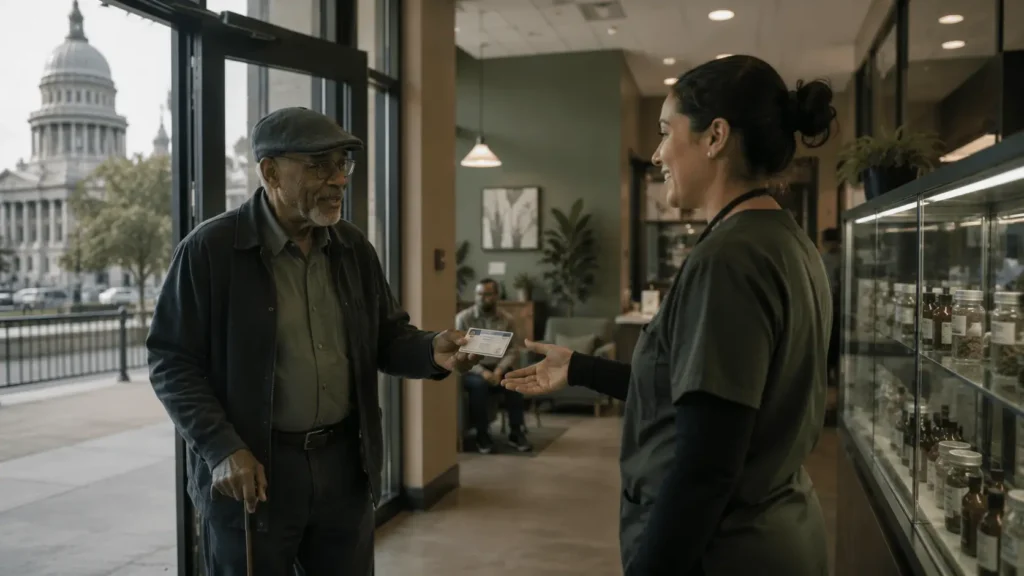
In many parts of the state, adult-use dispensaries exist where medical cannabis dispensaries do not. That has forced some registered patients to travel farther for medicine, or to purchase cannabis through the adult-use system and pay taxes they would not otherwise owe through the medical program.
SB 3222 addresses that gap by allowing licensed adult-use dispensaries to opt into serving registered medical cannabis patients. If broadly adopted, the change could significantly expand the number of locations where patients can purchase medical cannabis.
The law also expands telehealth certifications for medical cannabis patients, a change that could be especially meaningful for people with mobility limitations, chronic illness, disabilities, transportation barriers or limited access to specialized providers.
“Before serving in the General Assembly, I had the privilege of helping create Illinois’ medical cannabis program under Governor Pat Quinn,” Morgan said in a press release. “From the beginning, our mission was simple: ensure patients suffering from serious medical conditions could access the medicine recommended by their doctors in a safe, affordable, and dignified manner. This law advances that mission by making it easier for patients to obtain their medication, regardless of where they live in Illinois.”
For patients, the policy question is practical: Can they get their medicine without driving across the state, waiting weeks for an appointment or paying unnecessary taxes because the nearest dispensary is adult-use only?
“Our hope is that all dispensaries choose to serve medical cannabis patients because it’s the right thing to do. Patients built this program before adult-use cannabis existed, and they deserve continued access to their medicine. Opting out sends a negative message to patients and the medical community.” said Sandy Champion, a long-time advocate for medical marijuana who helped draft legislation for the pilot program in 2013.
“With this law, medical cannabis patients will now have easier access to products that can help provide relief from a variety of debilitating medical conditions and symptoms,” said IDPH Director Dr. Sameer Vohra. “In addition, thanks to Governor Pritzker and the General Assembly, the legislation will provide much needed oversight for intoxicating hemp products, ensuring that such products are properly regulated and safe for those who use them.”
The success of this portion of the law will depend on how many adult-use dispensaries opt in, how quickly regulators process that participation, and whether patients see a meaningful difference in their daily lives.

Relief for Social Equity Operators — But Not a Victory Lap
Illinois built its adult-use cannabis market with a promise of equity.
The state’s legalization law was nationally watched because it sought to repair some of the harm caused by cannabis criminalization. It created social equity licensing pathways, loans, grants and community reinvestment programs intended to bring new operators into an industry that had historically excluded them.
But the reality has been more complicated.
Many social equity license holders faced delays, lawsuits, capital shortages, real estate challenges, zoning obstacles, construction costs, predatory financing offers and a market dominated by better-capitalized companies. For some, winning a license was not the finish line. It was the beginning of an expensive and uncertain fight to open.
SB 3222 includes several provisions aimed at easing that pressure. The law updates social equity loans and grants, modifies licensing and operational rules, and gives regulators additional flexibility to help businesses move forward.
Those changes matter.
But they do not erase the larger question: whether the state’s equity framework can produce durable, independent cannabis businesses — not just licenses on paper.
“I can tell you what is significantly impactful for all adult use licenses. The removal of the third party security requirement. That in itself was such a large financial burden that it was essentially bankrupting companies. A single license was paying 150-200k a year in third-party security,” said Jeff Soenksen, of Canna Consultants
“This bill marks a giant step forward for medical patients, social equity operators, and the cannabis market as a whole,” said Erin Johnson, Illinois’ Cannabis Regulation Oversight Officer. “This legislation modernizes Illinois’ cannabis regulation by bringing the much-needed reforms that patients, consumers, and industry have been asking for, and further cements our role as a national cannabis policy leader.”
This is where the law deserves careful scrutiny. A reform package can remove barriers, but it cannot automatically create capital. It can extend deadlines, but it cannot guarantee real estate. It can modify licensing requirements, but it cannot by itself create a fair lending market.
For social equity operators, the test will be whether the law changes the conditions on the ground.
The Regulatory Cleanup Few People Will Read — But Every Operator Will Feel
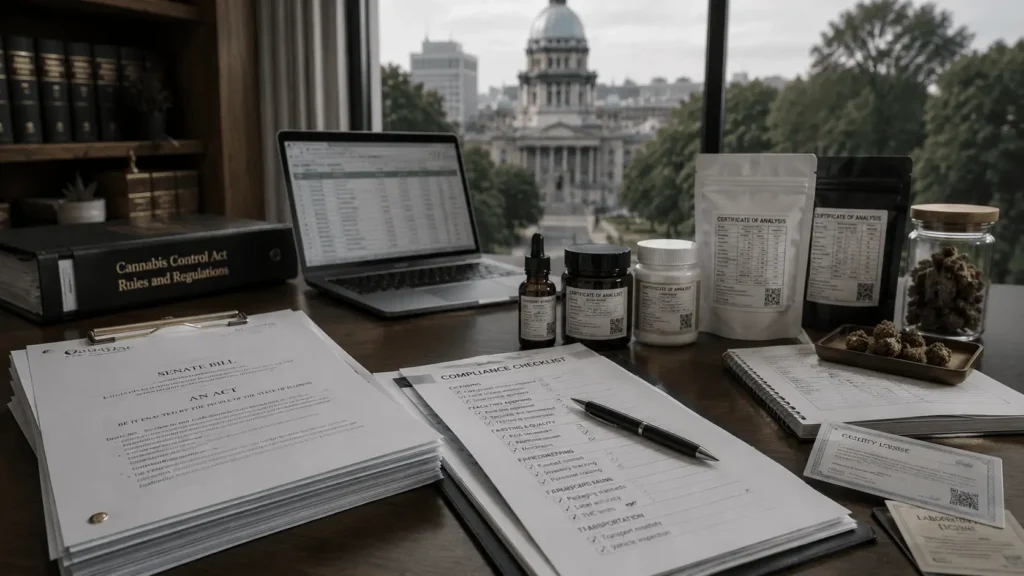
Much of SB 3222 is technical. That does not make it minor.
The law amends the Compassionate Use of Medical Cannabis Program Act, the Cannabis Regulation and Tax Act, tax statutes, consumer fraud provisions, vehicle code language and other parts of Illinois law. It updates definitions, licensing requirements, operational rules, possession limits, age restrictions, testing standards, confidentiality rules, tax provisions and enforcement authority.
It also authorizes the Illinois Department of Financial and Professional Regulation to issue or update medical and adult-use dispensing organization licenses and to issue cease-and-desist orders.
That matters because cannabis regulation is not just about what is legal. It is about who can operate, how quickly licenses can be updated, how agencies respond to violations, and whether businesses have a clear path to compliance.
“This marks a groundbreaking step in providing crucial consumer protections for users of cannabis and hemp products,” said Mario Treto, Jr., Secretary of the Illinois Department of Financial and Professional Regulation (IDFPR). “Illinois continues to lead the nation in building a responsible, consumer‑focused cannabis industry.”
“SB 3222 provides a long-needed framework for regulating and strengthening the Department’s Industrial Hemp Program to protect the state’s Hemp growers and consumers,” said Jerry Costello II, Director of the Illinois Department of Agriculture (IDOA). “This law will give the Department more tools to continue building on the work already done to make Illinois one of the most equitable cannabis markets in the nation while also strengthening health and safety protections for patients and adult use consumers across the state.”
For operators, the technical details are where the law becomes real. A single definition can determine whether a product is allowed. A licensing timeline can determine whether a dispensary opens. A testing rule can determine whether inventory moves or stalls. A tax provision can shape pricing, margins and patient affordability.
SB 3222 is not your average hemp bill. It is more of a regulatory reset.
The Politics of Getting It Done
The bill’s path through Springfield reflected both urgency and complexity.
“SB 3222 is what happens when preparation meets opportunity,” said Portia Mittons of Bridge City Collective. “The federal rescheduling of medical cannabis coupled with the federal redefinition of hemp intertwined with the efforts of so many over the past three years created a cocktail that was finally palatable enough to get the 60 required votes. I believe this bill puts us in a better position to modernize and grow our industry,” said Portia Mittons, partner at Bridge City Collective, and owner of Legit Trappin.
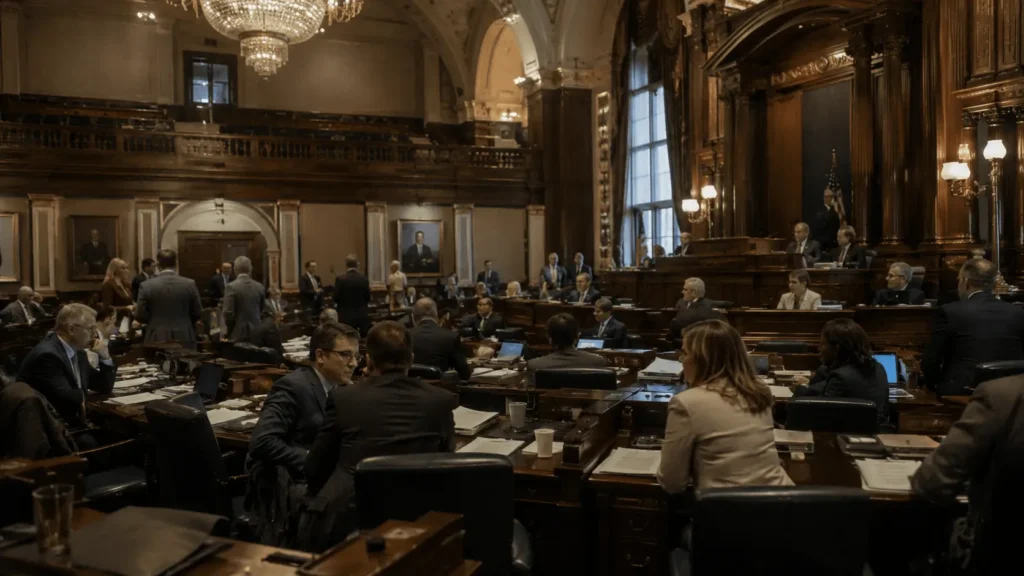
SB 3222 passed the Senate unanimously in May, then underwent significant changes in the House before returning to the Senate for concurrence. The final version brought together hemp regulation, medical cannabis access, social equity adjustments, and broader cannabis regulatory reforms into a single sweeping package.
Sen. Kimberly Lightford played a central role in the Senate. Rep. Will Guzzardi became a key House sponsor as the bill moved through its final stages. Rep. Bob Morgan helped champion the medical cannabis access provisions. Other lawmakers, including Reps. Justin Slaughter, Kevin Olickal, Lisa Davis, Barbara Hernandez and Sharon Chung, were also part of the final legislative framework.
“I have fought for years to bring order and fairness to these markets, and working with our House colleagues, we finally got it done,” said Senate Majority Leader Kimberly Lightford (D-Maywood). “This is about protecting people, keeping our promises, and keeping Illinois at the forefront nationally.”
“This bill accomplishes two important goals at once: it gets unregulated intoxicating hemp products off the streets and out of the hands of kids, and it also helps legitimate cannabis businesses compete,” said House Assistant Majority Leader Will Guzzardi (D-Chicago). “I’m proud of the collaboration that happened across chambers to help small, social equity cannabis entrepreneurs thrive in our state while keeping our products regulated and keeping Illinoisans safe.”
The politics were not simple because the stakeholders did not all want the same thing.
Licensed cannabis operators wanted intoxicating hemp products held to comparable standards. Hemp businesses feared being pushed out of the market. Medical patients wanted more access. Social equity operators wanted relief. Regulators wanted clearer authority. Public health advocates wanted stronger protections for minors.
The final law is best understood as a compromise — one that gives nearly every stakeholder something, but not everything.
That may be why implementation will be so closely watched.

The Industry’s Next Fight Is Rulemaking
In Illinois cannabis, legislation is only the first draft.
The details often come later, through agency guidance, administrative rules, licensing forms, enforcement priorities and compliance deadlines. SB 3222 will require coordination among multiple state agencies, including the Illinois Department of Agriculture, the Illinois Department of Financial and Professional Regulation, the Department of Commerce and Economic Opportunity, the Illinois Department of Public Health and the Cannabis Regulation Oversight Office.
For businesses, that means the next several months will be defined by questions.
- What products will be allowed?
- What documentation will hemp businesses need?
- How will recalls work?
- How will adult-use dispensaries opt into the medical program?
- How quickly will licenses be updated?
- How will the state enforce against noncompliant sellers?
- What will happen to businesses that have built revenue around products that no longer fit within the law?
This is where trade groups, attorneys, accountants, lobbyists and compliance consultants will play an outsized role. The law is broad. Operators will need help translating it into day-to-day decisions about inventory, packaging, vendor contracts, patient service, employee training and licensing strategy.
“Another major question that remains is whether Illinois’ law will make the cannabis industry more equitable. For sure, many of the changes will help the whole industry. A rising tide lifts all boats. But will it fundamentally close the gap between the big MSOs and the struggling single store entrepreneurs? The adage comes to mind: You need money to make money. So, in terms of equity,” I have my doubts, said Mark Peysakhovich, lobbyist and policy adviser at MBM Advantage.
For CBAI and other industry organizations, the work now shifts from advocacy to interpretation.

Who Could Be Hurt?
Any serious account of SB 3222 has to acknowledge that regulation creates winners and losers.
Licensed cannabis operators are likely to benefit from a clearer distinction between regulated cannabis and intoxicating hemp products. Medical patients may benefit from more access points. Regulators may gain tools to enforce standards that were previously difficult to police.
But some hemp retailers, small manufacturers and CBD businesses could face new costs, uncertainty or lost revenue. Consumers who relied on lower-cost hemp-derived intoxicants may see fewer products available or higher prices. Small businesses that operated legally under the old framework may now need licenses, new suppliers, new testing protocols or new business models.
The best implementation would distinguish between businesses trying to comply and bad actors selling unsafe or misleading products. The worst implementation would create confusion, uneven enforcement or collateral damage for legitimate hemp businesses.
That distinction will matter.
What Changes When?
Some parts of SB 3222 are effective immediately. The Illinois Hemp Act and the repeal of the Industrial Hemp Act take effect Nov. 12, 2026. The medical cannabis access provisions highlighted by Rep. Bob Morgan, such as increased possession limits and telehealth, take effect immediately, but there is a 90-day process for dispensaries to opt in with IDFPR.
For consumers, the timeline may feel confusing. For operators, it is crucial.
The period between passage and full implementation is not downtime. It is the transition window.
Businesses should use it to review product lines, vendor relationships, packaging, labels, marketing, inventory controls, medical patient service opportunities and compliance procedures. Medical cannabis patients should watch for announcements from dispensaries that choose to opt into the medical program. Hemp retailers should prepare for new licensing and product standards.
The Larger Question
Illinois legalized adult-use cannabis with ambitions larger than commerce. The state wanted a regulated market, safer products, tax revenue, criminal justice reform and a more equitable industry.
Five years later, SB 3222 is an acknowledgment that legalization was not a one-time event. It was the beginning of a system that would need maintenance, repair and recalibration.
The rise of intoxicating hemp exposed one weakness. Barriers for medical patients exposed another. The struggles of social equity operators exposed a third. Licensing and enforcement gaps exposed still more.
SB 3222 does not solve all of those problems. No single bill could.
But it does move Illinois into a new phase: one where cannabis and hemp can no longer be treated as separate worlds when the products, consumers and public health concerns overlap.
The law’s promise is straightforward: safer products, clearer rules, better patient access and a more workable market.
The challenge is whether Illinois can deliver that promise without burying small businesses in complexity, leaving patients waiting for access, or allowing enforcement gaps to persist.
The signing of SB 3222 was the political achievement, but the real work begins now.