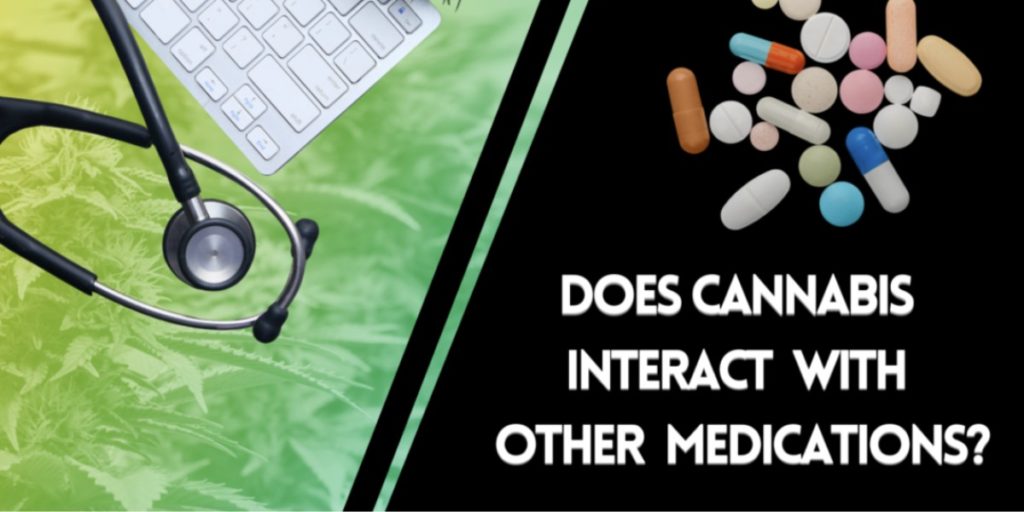
Yes. THC and CBD can interact with prescription medicines, over-the-counter products and supplements. Some combinations increase unwanted effects; others change how a medicine is processed. A pharmacist needs your actual medication list and cannabis product details to assess your situation.
Updated October 4, 2026. This is general education, not an individual interaction check or a medication-adjustment plan.
How do cannabis interactions happen?
There are two useful questions to ask: could the products have overlapping effects, and could one change the body’s handling of the other? These are different issues. Feeling more sleepy is not the only way an interaction can matter.
The FDA explains that CBD can affect other medicines and other medicines can affect CBD. Its guidance also identifies liver injury and increased drowsiness with alcohol or other substances that slow brain activity as concerns. Being plant-derived does not make a product interaction-free.
Which medicines need a review?
Bring your complete list, including medicines used only occasionally. The examples below illustrate different concerns; they are not an exhaustive list or a statement that every medicine in a category has the same risk.
Medicines that cause sleepiness
Flag sleep medicines, sedatives, opioid pain medicines and any over-the-counter product that warns about drowsiness. Include alcohol use in the conversation. The NHS guidance for morphine, for example, warns that combining it with cannabis can increase serious side effects. That is a reason for an individual review, not a reason to stop prescribed pain treatment on your own.
Seizure medicines and prescription CBD
The prescribing information for Epidiolex documents specific interactions. It notes that prescription CBD increases exposure to an active metabolite of clobazam, and that using it with valproate increases the incidence of liver-enzyme elevations. These findings concern a defined prescription product and require clinical interpretation; they are not a dosing guide for retail CBD.
Other regular medicines
Ask the pharmacist to review blood thinners, heart medicines, mental-health treatments, transplant medicines and supplements by their exact names and doses. A generic online list of hundreds of “interacting drugs” does not explain the evidence, severity or monitoring needed for your particular combination.
Does CBD cancel out THC?
Do not rely on it as an antidote. A small controlled Johns Hopkins study found stronger and more unpleasant effects when participants consumed 20 mg THC with 640 mg CBD than with the same THC amount alone. That high-dose experiment does not predict every retail combination, but it contradicts a blanket promise that adding CBD makes THC effects milder.
What to bring to a pharmacist or clinician
- Your medication list: exact names, strengths, schedule and reason for taking each prescription, over-the-counter medicine and supplement.
- The cannabis packaging: THC and CBD amounts, ingredient list, route of use and manufacturer. A photograph of the full label can help.
- Your pattern of use: measured amount, frequency, when you last used it, and whether anything recently changed.
- Your observations: when an unwanted effect began, how long it lasted and whether it followed a new product or medicine.
Useful questions include: “Does this combination need monitoring?”, “What symptoms should prompt a call?”, “Would a different product or approach change the risk?” and “Who should I contact before making a change?”
Common questions
Does spacing the products apart solve the problem?
Do not assume that taking them at different times makes a combination safe. Ask the pharmacist whether timing changes are meaningful for the specific medicines involved. Avoid inventing a waiting period from a general article.
Are CBD creams automatically interaction-free?
No product should be treated as cleared solely because it is labeled “topical.” Show the exact formulation, including whether it is a transdermal product, during the medication review. Read our guide to cannabis topicals for label questions.
Should I reduce my medication to make room for cannabis?
Do not independently reduce, stop or replace a prescribed medicine. Contact the prescriber about your plans. A medical cannabis card does not establish that a particular combination is appropriate.
When to get help
For a suspected cannabis poisoning in the United States, call Poison Control at 1-800-222-1222; call 911 for an emergency. The CDC’s cannabis guidance includes severe confusion, panic, hallucinations and severe nausea or vomiting among possible signs of overconsumption. Tell responders what was taken, including medicines and alcohol.
For nonurgent questions, start with the pharmacist or clinician who manages your existing medicines. Our medical-card privacy guide can help you prepare questions about how your information is handled.